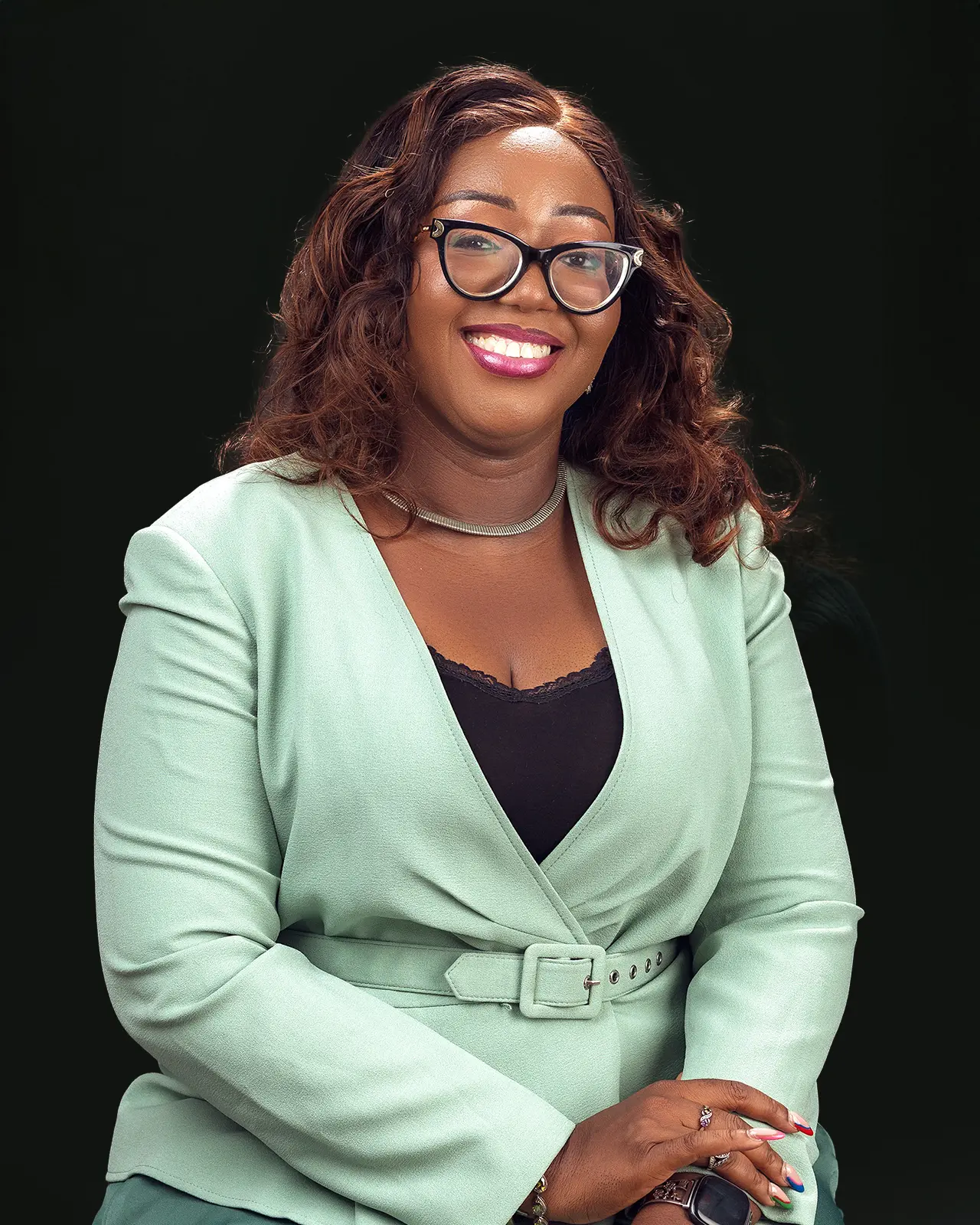
Lagos, Nigeria – Special Adviser to the Minister of Education, Dr. Adetola Salau, has called for an urgent transformation of Nigeria’s education system, emphasizing the need to move beyond rote memorisation and embrace critical thinking, innovation, and problem-solving.
Dr. Salau made this call while delivering a keynote address at the 10th Anniversary Celebration of the Bunmi Adedayo Foundation, held at the Shell Hall, MUSON Centre, Onikan, Lagos.
Speaking on the future of education in Nigeria, she highlighted the growing disconnect between traditional classroom practices and the demands of a rapidly evolving global economy driven by technology and innovation.
“We are living in a rapidly changing world defined by technology, innovation, and constant disruption. The jobs of tomorrow are evolving faster than our classrooms,” she stated.
According to Dr. Salau, the current educational framework continues to reward memorisation over understanding, routine over curiosity, and conformity over creativity.
“This must change,” she emphasized.
Reimagining Classroom Learning
Dr. Salau stressed that learning environments must be redesigned to encourage active participation and experiential learning.
“Students must experiment, not just memorise. Teachers must facilitate, not just instruct. Learning must be hands-on, not just textbook-based.”
She further noted that subjects such as Mathematics should inspire exploration rather than fear, while technology must become an accessible tool for learning rather than a distant concept.
“A mathematics class should be an exploratory session, not one that students dread. Technology should be accessible, not distant.”
STEM as a Framework for Innovation
Highlighting the importance of Science, Technology, Engineering, and Mathematics (STEM), Dr. Salau argued that STEM should no longer be viewed merely as an academic pathway but as a mindset that equips learners to solve real-world challenges.
“STEM has become a way of thinking. It is about being curious always, experimenting, solving problems, and iterating solutions endlessly.”
She explained that the ultimate goal of STEM education extends beyond producing scientists and engineers.
“STEM education is not about producing more scientists alone. It is about raising a generation of thinkers.”
Government’s Reform Agenda
Dr. Salau revealed that ongoing education reforms are focused on creating a coordinated national education architecture that includes:
- Artificial Intelligence (AI) readiness for teachers and students
- A national STEM pathway linking education to employment
- Data-driven policy and decision-making systems
- Stronger public-private partnerships
She underscored the central role teachers play in achieving meaningful educational transformation.
“No curriculum, no policy, no innovation can succeed without empowered educators. When we empower teachers, we empower nations.”
The Need for Collaboration
While outlining the government’s vision for education reform, Dr. Salau stressed that sustainable progress requires collective action.
“Government alone cannot do this. Neither can the private sector. Nor civil society in isolation. The future of education in Nigeria depends on collaboration.”
The event attracted several distinguished guests, including Senator Daisy Danjuma, Lagos State Commissioner for Information and Strategy, Gbenga Omotoso, and media entrepreneur Dele Momodu.
A Decade of Impact
Earlier, the Chairman of the Executive Council of the Bunmi Adedayo Foundation, Prof. Oluwole Atoyebi, highlighted the organisation’s achievements over the past ten years.
According to him, the foundation has positively impacted more than 550,000 learners and 7,800 teachers across Lagos, Ogun, Osun, and Rivers States through initiatives focused on foundational learning and teacher development.
“Each initiative represents transformed lives, strengthened educators, and renewed hope within communities.”
The Executive Director of the Foundation, Oluwakemi Odedeyi, announced the organisation’s next phase of growth, which aims to expand its reach and deepen its impact.
The foundation’s goals for the coming decade include:
- Training over 10,000 teachers
- Expanding digital learning opportunities
- Improving literacy and numeracy outcomes
- Strengthening educational systems across communities
“Education is not charity; it is infrastructure. It is the foundation upon which every other sector stands.”
She concluded by emphasizing the importance of partnerships in driving long-term educational transformation.
“No organisation transforms an education system alone. The scale of this ambition requires intentional partnerships.”